Lunar Urbanization Scheme
A Fullerene-Based Orbital Suprastructure for Regulating Habitation around the Moon
January
2026
Cities
Moon, Milkyway
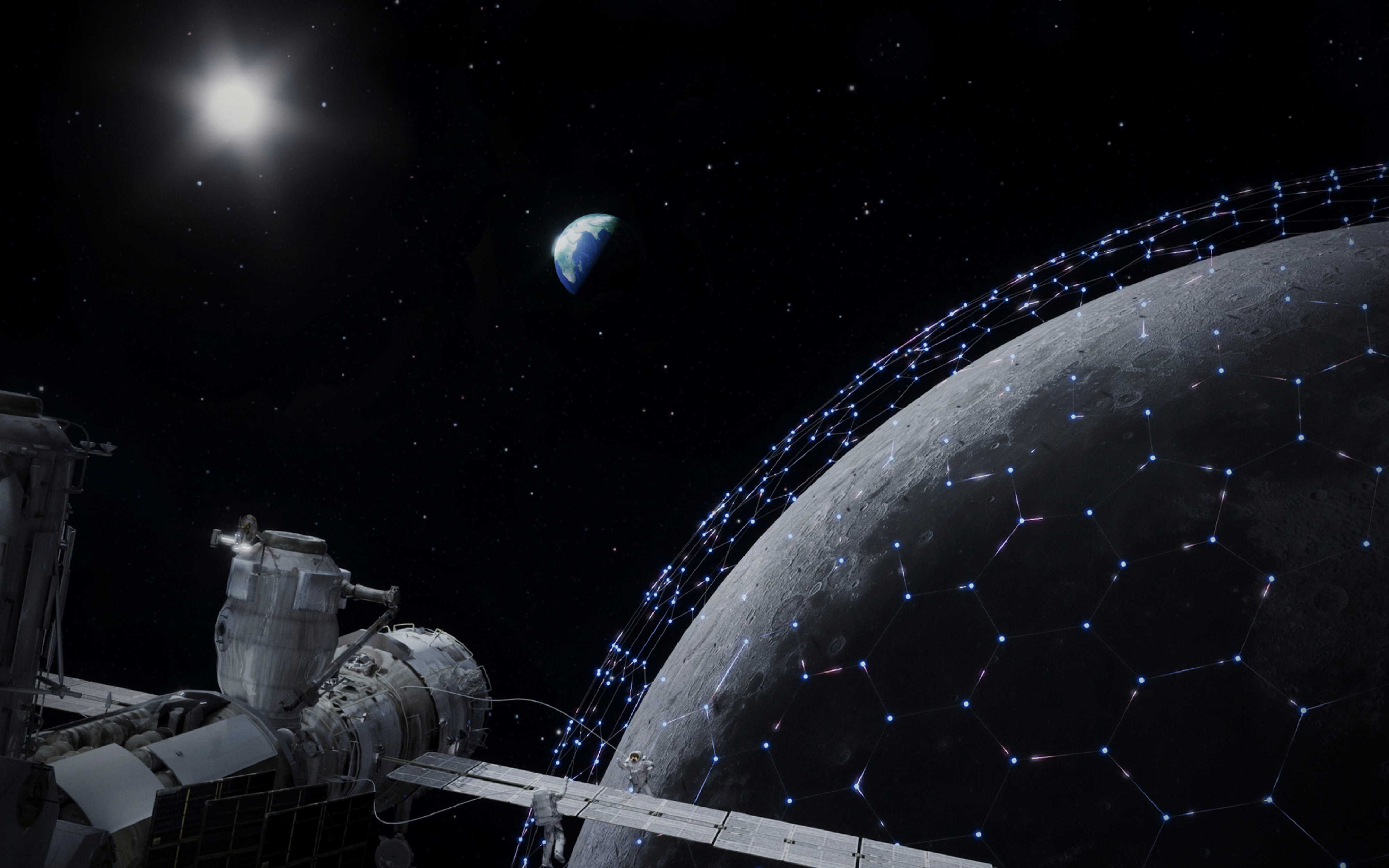
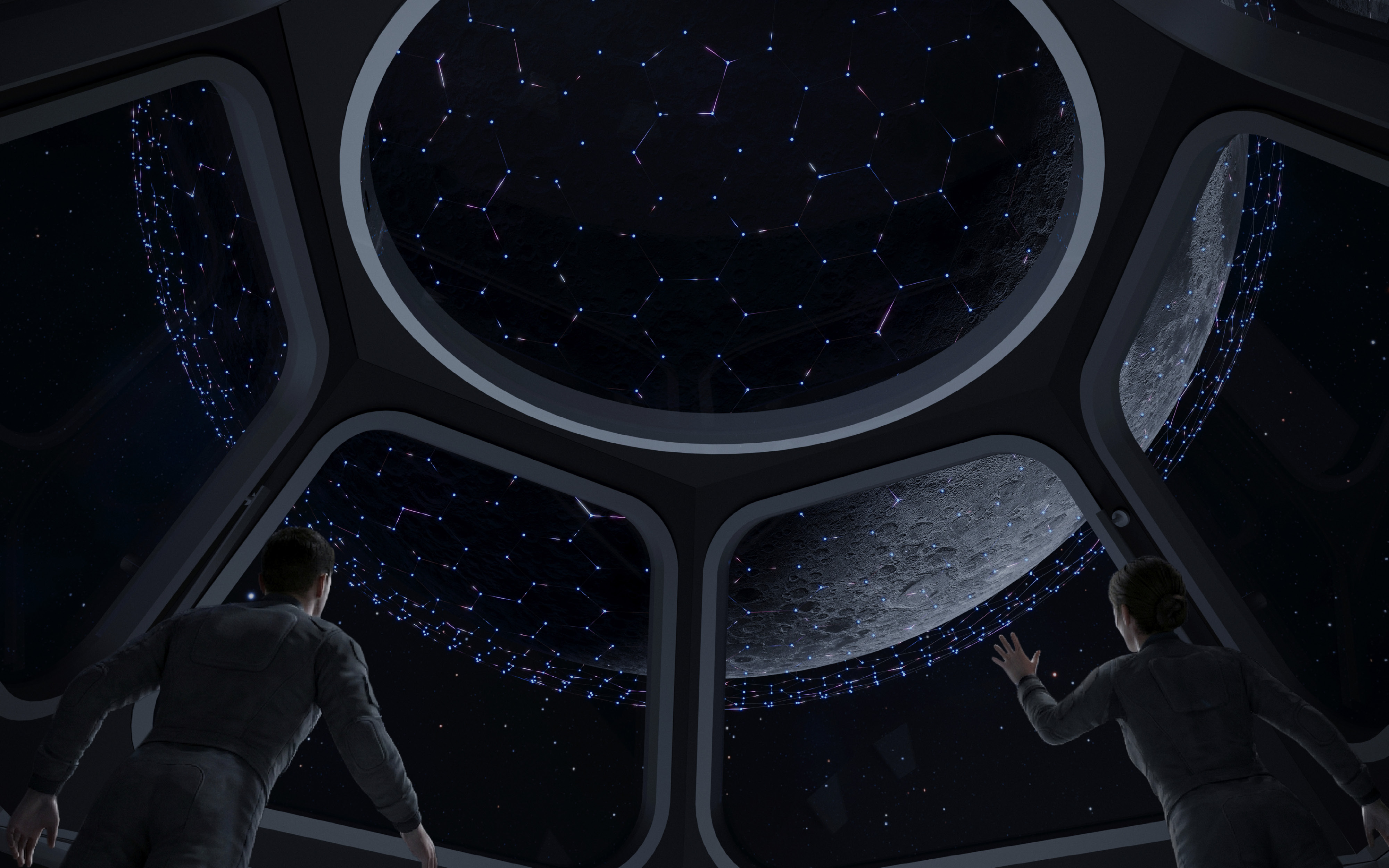
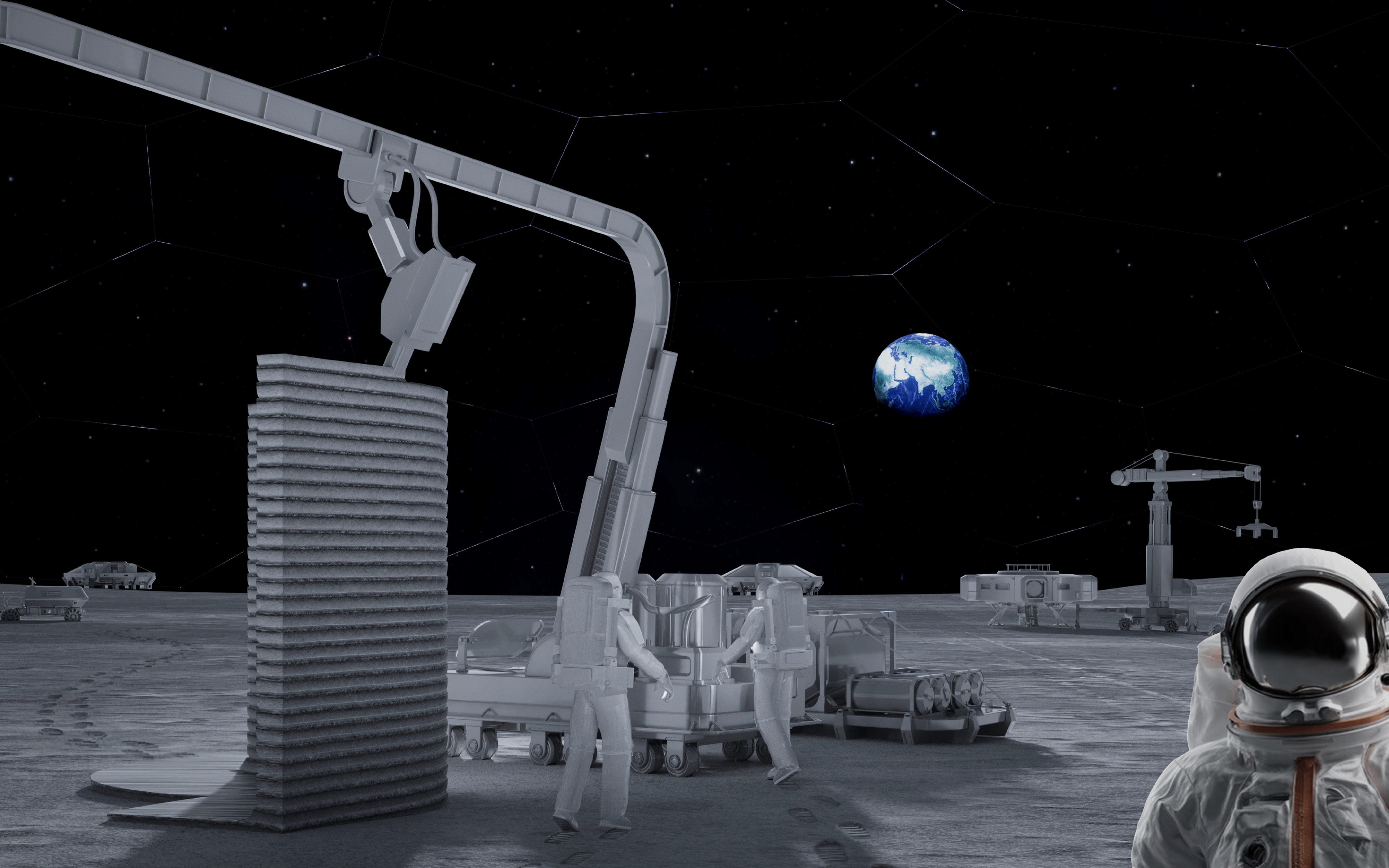
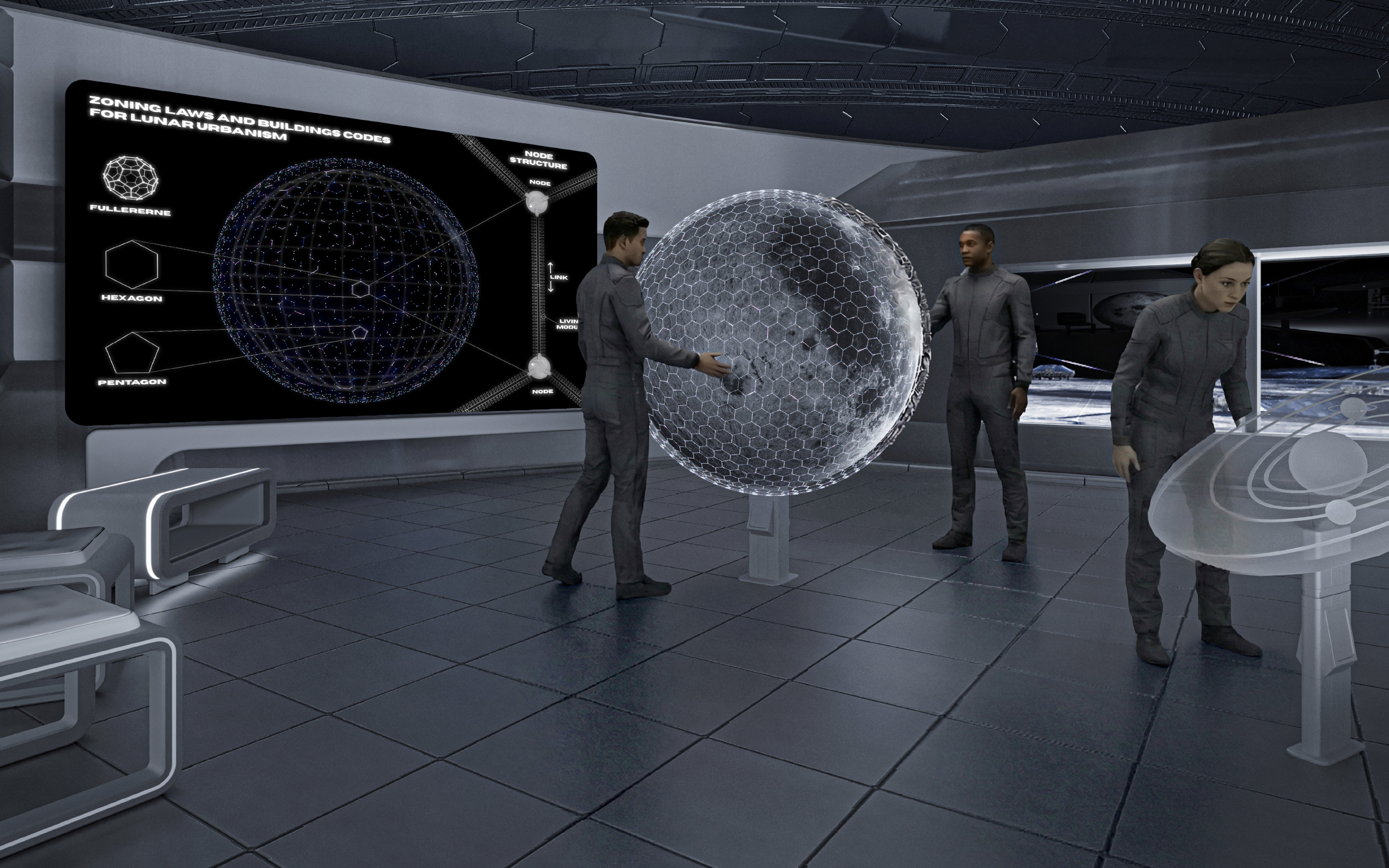
High-density human settlement beyond Earth faces two critical limitations from an urbanism perspective: the absence of material-systems research on viable extraterrestrial landscapes for sustainable construction, and the lack of spatial, legal, and infrastructural frameworks for organizing life in orbital environments. This Lunar Urbanization Scheme proposes a modular orbital suprastructure inspired by the molecular geometry of carbon fullerenes, forming a stable, interconnected, and detachable spherical network of spacecraft encircling the Moon. The structure is composed of pentagonal and hexagonal formations arranged as a continuous lattice. Within this framework, hexagonal cells function as city-like units that can be leased as codified orbital real estate supporting habitation and scientific activity, while pentagonal nodes function as governance, operations, and maintenance hubs. Following a dynamic node-and-bond spacecraft building-code logic, modules can detach, service, and reattach without destabilizing the larger structure, translating terrestrial zoning laws and civic infrastructure into an orbital context and reframing lunar orbit as a regulated civic region.
Affliation
Radhakrishnan Design Office